I see that the Oscar nominations are out. Which means that I can’t assess the veracity of the nominations since I haven’t seen most of the films. But I’ll still comment anyway. Dune by Quebec director Denis Villeneuve, came away with 10 minimations. I haven’t seen the movie - mainly because I have no interest in the kind of sci-fi that takes place on other planets - and tried to read the book in college but never got through the first one or two pages. Jane Campion’s The Power of the Dog got 12 nods. I had a chance to see this at Montreal’s Festival du nouveau cinema in October but deliberately passed - I’ve always found Campion’s works plodding and, like sci-fi, I’m really not that into the Wild West. Ditto for Will Smith’s King Richard. I love tennis but not keen on sports films and I hear that Denzel’s character, Serena’s dad, really wasn’t that nice a guy. Ditto most of the other films. Like Kenneth Branagh’s Belfast. I lived through that period (well, actually not in Belfast) and it was a hateful time. And I’m not keen on biopics and ones that don’t ring true, like the film’s Everlasting Love identifying soundtrack. Steven Spielberg’s West Side Story also got seven nominations. Why, oh why, I wondered whenever I saw reference to this film, did Spielberg have to do a remake? I kind of want to see Joel Coen’s The Tragedy of Macbeth even though, truth be told, Shakespearean speech seems, dare I say, a bit incomprehensible (I know I open myself to charges of Philistinism here) . But I heard the film is so great it transcends typical Shakes and I admire the Coens greatly. So we’ll see. Netflix had 27 film nominations for its stable but I cut the Netflix cord some time ago. And why would I want to watch Being the Ricardos (Aaron Sorkin.) when the original I Love Lucy series was so great? I had no interest in seeing the House of Gucci (Ridley Scott), starring of all people Lady Gaga. I mean, really, who’d want to see a movie about nasty Italian fashion glitterati? Don’t even mention Adam Mckay’s climate change diatribe Don’t Look Up, a supposed comedy which is really a humourless look at what the director thinks will be world catastrophe in 15 years - or less - while star Dicaprio parties on his giant yacht in the Mediterranean. I did actually see - yay! - Nightmare Alley. It had its moments I suppose (see Dec. 22 review). But I'd just watched the 1947 version (Edmund Goulding) and found that truer without Guillermo del Toro’s over the top noirish veneer. I love Aretha Franklin but again I really don’t care for biopics so skipped Queen of Soul (Liesel Tommy). As or the others, ditto meh.
Wednesday, February 9, 2022
Monday, January 31, 2022
Easy Rider - the ultimate hippie wet dream
Easy Rider certainly was a revolutionary movie when it came out. Directed by “hippie” director Dennis Hopper (later in life a Republican) and starring Peter Fonda and Jack Nicholson in his breakout role, the picture was considered a searing portrait of all that was uncool and intolerant of the America of that era. The story is about two bikers who set off from Los Angeles to New Orleans to catch Mardi Gras, and this road story is a panorama of Americana circa 1969 – the good and the bad. Wyatt (Fonda) and Billy (Hopper) have always been considered among the ultimate pop and counter-culture heroes. But really? These guys were major drug dealers. After doing a deal with Mexican cocaine lords they pocket the money in a tube in Wyatt’s chopper’s Star and Stripes-painted gas tank. Wyatt of course is Captain America with the US flag painted on his leather jacket. I was never sure about the symbolism and put it down to irony or an ideal America he wasn’t finding. Driving through smalltown America they’re met by cruel sheriffs and town rednecks. They’re locked overnight in a jail where they meet George Hanson (Nicholson) a libertarian lawyer who has nothing better to do and joins them on the road, complete with his shiny golden football helmet. Wyatt and Billy also pick up a hitch hiker who takes them to a free love commune. Billy is cynical and jumpy but Wyatt looks upon the gentle people and says, “Dig it, they’re going to make it.” (Make it in more than one way, but I digress.) More travails beset our nomads. But they finally make it to Mardi Gras, where the film turns into a visual LSD-fueled kaleidoscope of images where the whole kit and caboodle including prostitute Karen (Karen Black) drop acid. This movie – and story – is so old and well-worn I don’t think I’m breaking critic’s honor by divulging the ending. Our (anti) heroes finally get offed by a couple of hick rednecks, origin of the infamous “Easy Rider Rifle Rack” adorning the back of pickup truck cabs everywhere. A lot of the movie’s appeal had to be the soundtrack, from Steppenwolf’s Born to Be Wild to Dylan’s It’s All Right Ma to The Byrds' Wasn’t Born To Follow. The movie was definitely a reflection of its time and hardly represents today’s changed cultural landscape, where you can now find hip enclaves even in places in Oklahoma and Texas. Hell, hip is the culture that rules these days! And while the hippies are offed in this movie, the film I watched before this, 1973’s Electra Glide in Blue (James William Guercio), had Robert Blake as motorcycle officer John Wintergreen. In the final scene it isn’t the rednecks killing low lifes, it’s hippies in a VW minibus who take out a rifle and blow the cop away.
Monday, January 17, 2022
Fear and loathing driving down Provincial Road
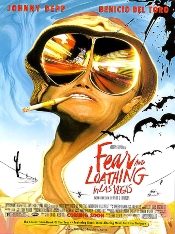
The closing of Cineplex’s Silver City in South Windsor has brought back some memories. In the late Nineties and early Aughts I made it a habit, almost every weekend, to watch a movie at the multiplex, the drive back downtown near where I lived afterwards through little trafficked Provincial Rd. and McDougall St., a late-night Windsor ritual. One time I went to see a film with a friend of mine, John. John had always struck me as a reasonable guy, a bright well-paid mid-level exec at a Detroit utility company. He had a wide interest in arts and culture. But this night something had simply sprung the wrong way in John’s mind, a bizarre outburst I’d never previously witnessed. We had come out of Silver City after having watched Fear and Loathing in Las Vegas, Terry Gilliam’s 1998 take on the famed Hunter S. Thompson novel, starring Johnny Depp and Benicio del Toro. The novel had long been a cult classic, and I was interested to see if the film could replicate the zaniness of the 1971 book’s over the top story. For those not in the know, the book is about a booze and drug-infused weekend in the world’s gambling capital by someone resembling Thompson - a famed “gonzo” journalist who wrote for Rolling Stone magazine - and his sidekick Raoul Duke. The novel was so emblematic of its time of the late-Sixties counterculture, packed with humor and craziness with a disreputable cast of characters who get caught up in our heroes’ mindless outrageousness. No, you didn’t have to be a druggie to enjoy it but the story was so representative of its times a huge number of people embraced it, a totemic symbol of hippiedom and lining bookshelves everywhere. So, after seeing the film that night and getting into my car, we started driving into central Windsor, the plan, as always, to grab a couple of beers at some downtown bar before John headed home stateside. But John this night was unusually quiet. I asked if something was wrong. I was sorry I did. My question unleashed a torrent of rage as John went on a non-stop rant about how vile and immoral the movie was. I tried to get in a sentence: “John, it’s only a movie.” I also said it’s a depiction of a certain era in modern American life, like it or leave it. “You don’t have to agree with it.” But John was having none of it, repeating ad infinitum how disgusting and offensive the flick was. His rant was like a funnel of water that couldn’t be turned off. I even wondered if John was part of the Moral Majority, his criticisms so bitter that he was personally afflicted. Finally, trying to change the subject, I said, “Where shall we go for a beer?” “Beer!?” he replied. “I’m not going for a beer, I’m going home!” We said goodnight – he might have grumbled it if he said anything. That wasn’t the end of our friendship; that would come a year later over an even bigger out-of-nowhere John seeming psychic meltdown.
Friday, January 14, 2022
Silver City's demise and C'mon already
The most stunning thing about the announced closure of Cineplex’s Silver City cinemas in South Windsor is the fact the building is something like 25 years old. Has it been that long since the “new” concept of stadium seating was introduced, at least in Canada, in these mega theatres? And what does that say about my age?....Speaking of movie theatres, there’s an interesting article in December’s Commentary magazine by Wall Street Journal culture writer Terry Teachout questioning whether we even “need” movie theatres anymore. Especially post-Covid when people are scared to be in anything relatively physically close to one another. Though I must say I’ve continued to enjoy the movie going experience since theaters re-opened last year – the “event” and communal experience et al – until the Ontario Government decided to slam the doors shut again this month in the wake of the Omicron outbreak. Teachout paid homage to the “big screen” argument (as per Scorsese and Spielberg) but his argument is that theatres are limiting, especially when such a vast inventory of films is available through streaming sites like TCM, Criterion, Netflix and Amazon Prime. There may always be a younger audience for blockbuster franchises, he says. But “the future of moviegoing by adults clearly belongs to streaming. Whatever they miss by not seeing classic films in theatres, they will at least be able to see them whenever and as often as they like – and that is what matters most."
After some anticipation I was disappointed by Mike Mills C’mon C’mon. Its story opens in Detroit and there are some great overhead scenes of a wintry city (in black and white) including the People Mover winding around downtown towers. But its overall mood is glum. Johnny (Joaquin Phoenix) is a radio producer travelling across the country asking kids about their lives and aspirations, kind of like a serious Art Linkletter (Kids Say the Darndest Things, the original). But his sister, Viv (Gaby Hoffmann) is a neurotic writer, pushed into more angst by the commitment of her husband Paul (Scott McNairy) into psychiatric treatment. Viv cannot handle her remarkably precocious son Jesse (“I mostly hang out with adults”). Johnny offers to take him on the road as his “sound man.” So, the movie’s a road trip. And a bit of an enlightening one at that, as Jesse often takes on, yes, the adult role, confronting Johnny on how he lives his life. “You are just terrible” at expressing his emotions, he admonishes the at times sad sack grown up. This dynamic is interesting, to a point. But there is no overriding message or theme that comes out of this, just a kind of meandering quotidian following of characters. Phoenix, consciously or unconsciously, is starting to look and sound more like Brando. The spare and probing soundtrack by Bryce Dessner and Aaron Dessner, which underlies the moody script, is very good.
Wednesday, January 5, 2022
Tinsel bits on a winter night
Bridget Jones’s Diary (Sharon Maguire, 2001) is one of those guilty pleasures, pure candy floss, an antidote to a winter night or any night. The problem is that it hasn’t aged well. Unless I’m missing something. Because this film, based on Helen Fielding’s 1996 novel, is so cliché ridden and even anti-feminist, it’s surprising it was made then, and would it be made now? (Though the third in the series, Bridget Jones’s Baby, was released as recently as 2016.) First, we have Jones (Renée Zellweger), pace Elizabeth in Jane Austen’s Pride and Prejudice, as the shriveling, low self-esteem heroine, belting out “(Don’t wanna be) all by myself” in her lonely room, describing herself as a “spinster.” She is awkward and disdained by Mark Darcy (Colin Firth) and is used by Daniel Cleaver (Hugh Grant), all the while awkward and overcoming body image problems. Sure, she gets the right man in the end but her personality is not a tribute to modern womanhood…..Meanwhile, This is Spinal Tap (Rob Reiner, 1984), which Kurt Cobain called “the only rock movie worth watching,” is such a brilliant satire on heavy metal bands that you could be forgiven for thinking the band in it is the real thing. Reiner plays the straight documentarian out to capture the essence of this seminal typically hedonistic group, Spinal Tap, a mashup of every metal band you’ve heard from Iron Maiden to Led Zeppelin, to hell, The Rolling Stones. In doing so it mocks a whole bunch of rock documentaries that take their subjects oh so seriously. It doesn’t necessarily take long for the satire to become obvious. But what’s great is the fake band’s seemingly real music and on-stage theatricality, with songs and absurd lyrics – though not far from the words of real bands – that sound a hell of a lot like the real thing. There’s a huge cast here, and some well-known actors and celebs like Ed Begley Jr., Fran Drescher, Patrick Macnee, Billy Crystal, Dana Carvey, Paul Shaffer and Anjelica Huston. Christopher Guest, imitating an English accent, is a hoot as main band member Nigel Tufnel…...Now, I’m all for noirs, especially of the kind made in the 1950s, but sometimes you’ve got to blow the whistle. That’s the case with Gerd Oswald’s 1957 Crime of Passion. Talk about feminism. This is a feminist prototype and a screed against marriage in the oh-so-domestic Fifties. But come on. Barbara Stanwyck as Kathy Doyle, a hard-bitten reporter, quits her job and, based on a couple of dates, marries and goes all couply bliss with hubby Bill Doyle (Sterling Hayden)? And is immediately so driven out of her mind by housewives’ empty chatter she plots, highly improbably, to undermine her husband’s career? Sorry, but this has all the trappings of a rushed slapped together script.
Wednesday, December 22, 2021
Nightmare Alley: the two versions
Nightmare Alley, Guillermo del Toro’s new film, is a noir that pays tribute to the 1947 novel of the same name by William Lindsay Gresham. It has an all star cast in Bradley Cooper, Cate Blanchett, Toni Collette, Willem Dafoe, and Rooney Mara. I’d been anticipating this film and was lucky to discover that the original Nightmare Alley, Edmund Goulding’s 1947 film starring Tyrone Power, was available on the Criterion Channel. I watched that film first and then saw the current release yesterday. How do the two
compare? Del Toro’s film is lush, stylistic, moody and very atmospheric, brilliantly so. Goulding’s version is sparer if I can use that term. Both films are set among seedy carnivals and ethically compromised carnies. But Goulding’s film is straightforward with a story that grips from the first scene. Del Toro’s may be “prettier” in its gruesomeness, but the storyline goes missing from time to time; several times I found my mind wandering. Bradley Cooper as lead Stanton Carlisle has the perfect brooding profile but in an effort at authenticity his voice is garbled at times, and it can be all effect and lacking substance. In the 1947 version we can understand everything Power as Carlisle says, and he indeed says more so we can better follow the plot. Meanwhile, in the new version, Willem Defoe is typically nefariously great as barker Clem Hoately. But as much as I like Toni Collette, I preferred Joan Blondell as Zeena Krumbein in the 1947 film. Maybe it’s just “dames” from that period but her physical fulsomeness matched her off the cuff demeanor as a show performer and plausible Carlisle romantic interest. The other problem with the current film is Blanchett. I can’t believe I’m saying this since I’m a huge fan of the multi-talented Blanchett but here she disappoints. Perhaps it’s the script. When Carlisle falls in love with this big city psychologist and the two become thicker than thieves, there’s a near final scene where Blanchett as Lilith Ritter is forced to deliver one or two-word answers that seem so formulated they’re almost laughable to hear. Perhaps if I hadn’t seen the 1947 movie I’d be more impressed with del Toro’s version. After all, the movie is searingly atmospheric and richly depicts a mid-20th century netherworld beloved of noir addicts. One of Canada’s top film critics was so duly impressed. But the current version, while brilliantly executed in terms of sets, costumes and even score, is just too contrived and even pretentious, especially after seeing the leaner but more straightforward and ultimately gripping late Forties flick.
Wednesday, November 24, 2021
Windsor a market "we can count on" for Asian films
It took almost a week but Cineplex did respond to my request for an interview about Asian films screening locally (see post Nov. 18). And they set me up with their VP of Film Buying Robert Cousins, no less. Here's the gist of the interview as per my article appearing in companion website, www.WindsorOntarioNews.com.
You’ve heard of Bollywood. Now there’s Pollywood – the world of Punjabi cinema - and playing at Cineplex’s Silver City cinemas. In fact, Punjabi films have been screening there for several years as part of the theatre chain’s expanding showcase of Asian films. Besides Punjabi there are of course Bollywood, or Hindi language films, as well as Chinese movies. Why has Windsor been selected to screen such a wide variety of films from Asia? “In a lot of Canada it comes down to just regional immigration,” Robert Cousins, Cineplex’s VP of Film Buying, says. “Hindi for years has been the main language of our South Asian business. But Punjabi in Canada is the predominant other language.” Originally, South Asian films booked in Windsor came from US distributors whose advertising in Detroit “was bleeding over into Windsor and who said, ‘why don’t we take a date in Windsor.’ ” Attendance in the succeeding years “has been good,” Cousins adds. “Windsor has been one of those markets that we can count on when we open up a big film.” In terms of general attendance Asian films, like those of Hollywood, vary in appeal “title by title,” he says. “Big titles do extremely well.” The market is “very star-driven” and themes are important. “For the longest time we used to do extremely well with romances, and then there were more action movies,” Cousins says. And titles just don’t last a week. “We treat our South Asian business like we treat out Hollywood business, as long as the public comes to watch it, it plays.” And the films can be watched by the non-Asian community since they all come with English sub-titles. In fact, some non-Asians have discovered this cinema. “They went to one and they realize these are full blown productions,” Cousins says. As well, there are movie styles “that we in North America don’t do anymore.” Melodrama, for instance. “Whether they be Chinese or Indian or other markets heightened emotion – heightened melodrama – is still a big part of the market.” In Windsor Silver City is exclusively the place to watch Asian films. “You want to make sure you can park the films in that theatre” so the audience realizes that’s the place to go to see them.....Recent titles have been romantic comedies Paani Ch Madhaani and Honsla Rakh. And coming this week are Warning and Antim: The Final Truth.
Subscribe to:
Posts (Atom)